
Logan’s Historic Photopolymer Era Comes to a Close

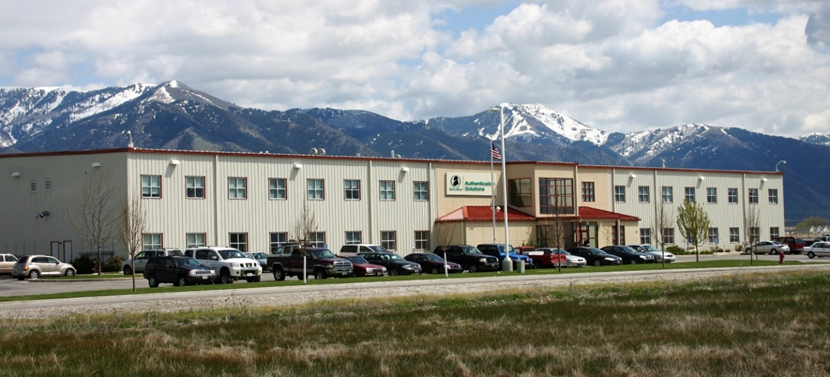
The physical landscape of the holography and authentication industry is changing once again. With the closure of its photopolymer manufacturing facility in Logan, Utah, Crane Authentication, part of Crane NXT, has transitioned the facility as part of a broader portfolio evolution while advancing its next-generation physical and digital authentication solutions.
The decision marks an important transition point in the evolution of the authentication industry, in the history of commercial volume holography, and in the development of photopolymer security materials.
Commenting on the transition, Crane Authentication stated: ‘the closure of the Logan site was a carefully planned and well-executed transition that has enabled Crane Authentication to move customers onto our latest physical and digital solutions, accelerating business growth while improving customer experience and simplifying our technology portfolio. Our priority throughout has been to look after our customers and our associates and to close the site with the respect and transparency the team deserved, in line with Crane NXT’s core value to Do the Right Thing’.
The house that photopolymers built: Logan’s history
The story of the Logan site began long before it became part of a global authentication portfolio. The site had a long history spanning several decades, and its closure marks the end of one of the most influential production facilities in holography and authentication.
The roots of Logan’s holography industry stretch back to the 1970s, when holography pioneer Richard (Rick) Rallison (1945-2010) established a research and production facility in the region following his work on early head-up display (HUD) technologies at Hughes Aircraft Corporation. Logan’s dry, low-humidity climate provided ideal conditions for producing dichromated gelatin (DCG) holograms, a material that is highly moisture-sensitive during manufacture.
Initially focused on rotating DCG scanning discs for barcode-reading applications, Rallison’s operation later expanded into reflection holograms for commercial and decorative markets, helping establish Logan as an important centre for holographic innovation. This early expertise in holographic materials and production laid the foundations for the succession of companies that would later operate from the site and ultimately drive the development of advanced photopolymer-based security holography.
Over the decades, the facility underwent several incarnations, including Holographic Products, International Dichromate Corporation (IDC), US Holographics, and Krystal Holographics Inc (KHI). The latter was acquired by DuPont in 1999. As the sole supplier of holographic photopolymer film, DuPont transformed the company into a world leader in the field and renamed it DuPont Holographics.
Unlike traditional silver halide materials, holographic photopolymer films require no wet chemical processing and offer excellent environmental stability, high diffraction efficiency, and the ability to produce bright reflection holograms.
DuPont further expanded its presence in authentication technologies through a joint venture with Keystone Technologies LLC in 2001, creating DuPont Authentication Systems (DAS) to market and distribute unprocessed holographic photopolymer film. In 2005, DuPont acquired the remaining interest in DAS, bringing the Logan operation fully into the authentication business. The site became the manufacturing centre for overt, covert, and forensic brand protection solutions built around its proprietary Izon® deep three-dimensional photopolymer labels.
The company was later rebranded to DuPont Authentication as its focus increasingly shifted towards security and brand protection applications. To support growing demand for technologies such as Izon and Omnidex, the company invested heavily in advanced manufacturing operations in Logan.
Within the site’s specialised coating lines and cleanroom facilities, photopolymer formulations were transformed into highly sophisticated security films. Unlike conventional embossed holograms, these materials enabled true volume holograms to be recorded directly within the material, creating optical effects that proved exceptionally difficult to counterfeit or reproduce.
The technology found applications across both commercial and government programmes. Global brands including Lenovo and Brother adopted Izon authentication labels, while governments incorporated the technology into secure identity documents and passport programmes.
Recognising the strategic value of these technologies, De La Rue acquired DuPont Authentication in 2017 for $25 million.
The acquisition included the Logan manufacturing facility, research operations in Delaware, intellectual property assets, and established brands including Izon, Traceology, and Omnidex.
The new chapter
A new chapter began when Crane NXT finalised the acquisition of De La Rue Authentication Solutions in 2025. The transaction brought together complementary authentication technologies and inherited a diverse manufacturing and product portfolio.
While the Logan facility represented a remarkable achievement in chemical engineering and holographic manufacturing, the authentication market has evolved significantly. Today, customers increasingly seek integrated solutions that combine advanced physical security features with digital verification, track-and-trace capabilities, and connected authentication platforms.
As Crane continues to evolve its portfolio towards next-generation physical and digital authentication technologies, the global landscape for high-security photopolymer volume holography is becoming increasingly concentrated. Covestro, Dai Nippon Printing (DNP), and Toppan in Japan continue to maintain significant high-precision capabilities in this sector, alongside specialised regional players such as Krypten in Russia and South Korea’s LG Chem, which has collaborated with Zeiss on photopolymer materials for next-generation automotive holographic windshield displays.
Against this backdrop of industry consolidation, the closure of the Logan site highlights Crane’s strategic direction. Rather than competing in large-scale photopolymer film production against established manufacturing specialists, the company is increasingly focusing its resources on integrated physical-digital authentication solutions, advanced micro-optics, and connected security technologies.
Get the Holography & Optical Technology News™ Weekly delivered free to your inbox.