
Seeing 1066 in a New Light

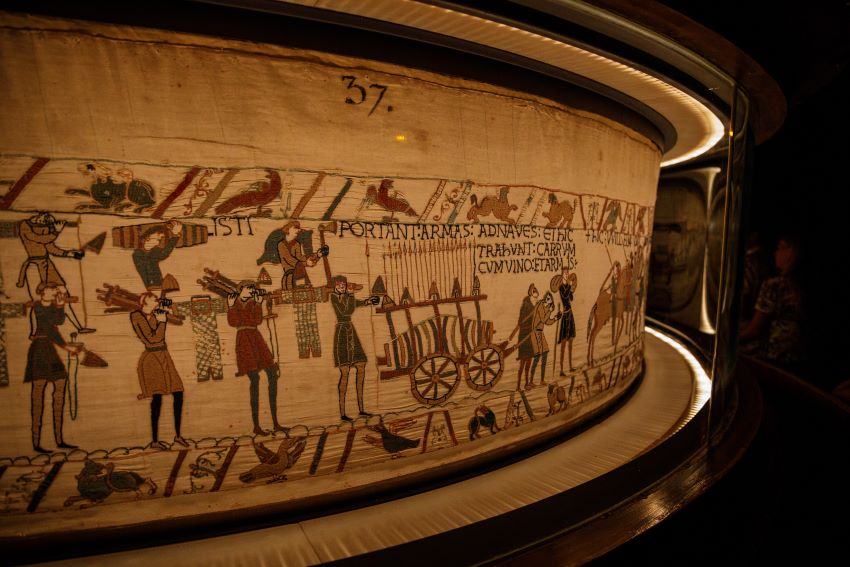
When the Bayeux Tapestry goes on display at the British Museum from September 2026 to July 2027, most attention will naturally focus on its depiction of the Norman Conquest. For the optical technologies' community, however, the exhibition highlights another aspect of the object, namely, how its materials can be interrogated through their interaction with light, revealing information that cannot be obtained through conventional visual examination alone.
The principle will be familiar to those working in security and authentication. Passports, banknotes and other secure documents routinely exploit wavelength-dependent reflectance, fluorescence, angular response and surface microstructure to create optical characteristics that are recognisable but difficult to reproduce.
Cultural-heritage researchers use many of the same properties in reverse. Rather than engineering a distinctive optical response into an object, they measure the responses already present to identify materials, distinguish later interventions and uncover information hidden beneath the visible surface.
Subscriber content
Read the full article
Full access to Holography & Optical Technology News™ articles, newsletters and archives.